
Not every car relocation is a do-it-yourself adventure. Most often, hiring a car shipping company is a more practical and handy solution when moving a vehicle over longer distances or across the country, or in an emergency. With so many companies promising fast delivery and competitive pricing, choosing the right one can feel overwhelming.
We understand that your vehicle is one of your most valuable assets. Hence, you naturally want to ensure it is handled with care, transported safely, and delivered on time before trusting anyone. With an insider insight, this comprehensive guide covers everything you need to know to make the best decision and enjoy a stress-free shipping experience.
Step 1. Identify Your Vehicle Shipping Needs

Though choosing the right shipping partner is mandatory, knowing your own needs is imperative in making a rational decision. Before contacting any transport services provider, take time to understand what you need and what suits you the best. Analyzing these details will help you choose services in line with your requirements and receive accurate shipping quotes.
Ask yourself these simple questions:
- What distance will the car travel? Whether it’s a local or interstate route, or across-country shipping, choosing a local hauler or a nationwide operating provider.
- What type of vehicle do you own, and what is the associated value, such as standard cars, SUVs, luxury vehicles, or classic models, for choosing a mode of transport?
- Is your car running, or is it inoperable and requiring mechanical assistance?
- How flexible are you with your schedule, such as your pickup and delivery dates?
- Are you someone looking for the most affordable option, or prefer premium protection over cost?
Knowing your preferences upfront makes the selection process smoother, as you know exactly what to look for. This clarity helps you in many ways, from planning precisely to managing budget effectively, so you don’t get hit with unexpected fees.
Step 2. Understand Transport Options: Open vs. Enclosed
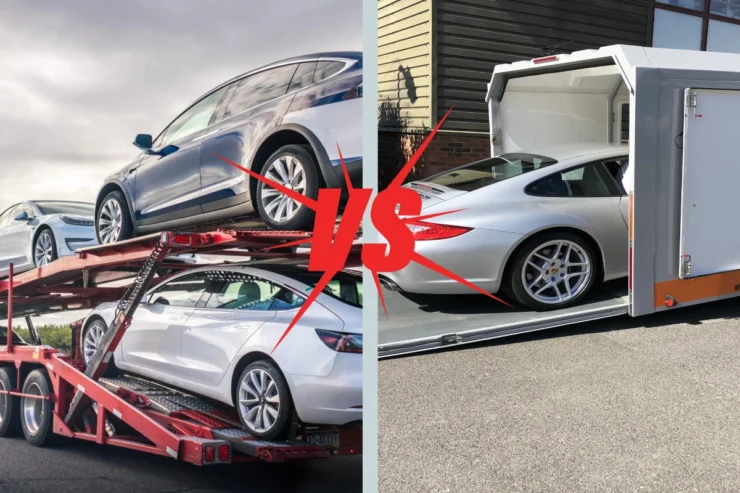
The two most common methods are Open carrier car shipping and enclosed transport. Each offers unique advantages and has potential drawbacks depending on your vehicle type and budget.
– Open Carrier Car Shipping
This is the industry’s most widely used and cost-effective option. Your vehicle is transported on an open trailer that typically carries 6–10 cars. Although vehicles are exposed to weather and road dust, open carriers are safe, regulated, and fully insured, eliminating the risk for customers. Damage is rare, making this method suitable for the majority of vehicles, including:
- Standard vehicles, such as commuter cars and daily drivers
- Customers seeking an affordable solution and dealership transfers
- Faster scheduling, since open carriers operate more frequently
– Enclosed Auto Transport
Enclosed carriers offer added protection by covering the vehicle on all sides, but they cost slightly more than open carriers. It is similar to shipping a car in a fully enclosed shipping container, sometimes single and often with a couple of other vehicles. This option is best for:
- Luxury, exotic, or high-value cars due to added protection against external elements
- Classic or collector vehicles that are rare and require white-glow service
- Everyone is concerned about premium care and protection over budget
Step 3. Choosing Your Shipping Partner
Once you are entirely sure of your shipping requirements, the next step is to request multiple quotes from multiple providers. You can request three quotes from top-rated companies and compare them against this criterion:
- Experience, Licensing, Insurance
One of the most essential steps in choosing a car shipping company is ensuring it is legally authorized to operate and has a proven track record. Reputable companies are generally transparent and provide all information related to their legitimacy to give customers peace of mind. Every legitimate transporter must be:
- Registered with the U.S. Department of Transportation (DOT) and years of experience
- Listed with the Federal Motor Carrier Safety Administration (FMCSA). You can verify their number online.
- Able to provide active insurance documentation, such as policy number and coverage limits.
4. Compare Quotes Smartly
While getting multiple quotes is essential, choosing the lowest one isn’t always the most brilliant move. “All that glitters may not be gold”. You should be aware of extremely low prices, as they may indicate:
- Unreliable carriers, lack of professional experience, poor service quality
- Hidden fees that may show up later, giving u a financial stroke
- A broker may be unable to secure a driver for the quoted rate
- If your fortune is not in favour, then you may end up in a scam.
Then, What to Consider When Comparing Quotes?
- What’s included in the price: base price, insurance, etc
- Whether the quote is binding or estimated
- Payment terms, whether an upfront deposit is necessary
- Cancellation and rescheduling policies
Comparing quotes with a vigilant mind will help you ensure you are not overpaying nor getting lured by cheap services. The best provider offers a balance of affordability and reliability.
5. Check Reviews and Track Record

Online reviews reveal how a company treats its customers. Pay attention to how they respond to negative feedback. A professional, solution-oriented approach shows strong customer service. Reputable platforms include Google Reviews, Better Business Bureau (BBB), and TransportReviews.com
Look for consistent feedback for:
- Punctuality: On-time pickup and delivery
- Professional drivers and carriers
- Transparent communication and responsiveness
- Satisfactory liability claims handling
6. Evaluate Customer Service Quality
A smooth shipping experience depends heavily on communication. The right car shipping company will answer your questions clearly, provide realistic timelines, offer real-time shipment updates, and assign a dedicated representative to walk you through each step of the process.
8. Read the Contract Carefully
Before signing, review the following details and verify with your service provider:
- Insurance coverage details
- Terms for delays or cancellations
- The damage claims process
- Delivery timeframe estimates
- Any additional fees
Final Thoughts
Choosing the right car shipping company is not a challenge; just a little research, and you will find the best shipping partner. Before jumping into that, you must understand your needs. After evaluating your needs, go for a partner that is licensed, bonded, insured, experienced, and offers cost-effective services. By comparing quotes and paying attention to customer feedback and contract terms, you can avoid potential risks of loss or scams.