

The listing wrote itself. That was the problem.
For years, writing up a used Camry meant a sales manager typing “clean, one owner, must see” into a text box at 6 p.m. before heading home. Then vehicle description generators showed up inside the DMS, pulling specs straight from the VIN and spitting out a paragraph in seconds. TraderWay, a UK dealer platform, puts the old manual process at 10 to 15 minutes per advert; its AI button gets that under a minute. That part of the story is a straightforward efficiency win.
The part nobody quite planned for is what happened next: thousands of dealers running the same VIN-decoding tools produced thousands of listings that all sound identical. Vehiso’s own marketing page shows the kind of copy its AI hands back for a “low mileage, good condition” car: “Discover this exceptional low-mileage vehicle, meticulously maintained and ready for its next owner. Boasting a full service history and a host of premium features, this car delivers outstanding value.” That sentence could sit under any car, on any lot, in any state. It says nothing about the actual vehicle. So some dealerships added a second step: run the AI-written listing through an AI humanizer before it ever reaches a shopper’s screen.
How AI actually ended up writing your local dealer’s listings
This isn’t a fringe experiment. CDK Global’s Vehicle Inventory Suite added tone, length, and CPO-messaging controls to its AI Description Writer in an August 2026 product update, letting dealers weight which Chromedata attributes get top billing. CarDescribe advertises 3,800-plus generated descriptions and counting, built to add local road names and verified CPO warranty terms across 35-plus brands. Spyne says it has produced more than a million vehicle descriptions and claims up to 70% more shopper engagement on the results.
The market pressure behind all of it is real: a report from Spyne’s Auto Retail Intelligence Quarterly found 76% of U.S. dealers planning to increase AI spending, against a backdrop where the average three-year-old used vehicle topped $30,000 in 2025 and margins kept compressing. Writing unique copy for every unit in inventory used to be a job for a copywriter dealerships didn’t have. Now it’s a button. The problem is that a button pressed identically by every competitor produces identical output – which is exactly what a second layer of AI is now being paid to undo.

What a raw AI-generated listing sounds like – and why buyers notice
Large language models write by picking the statistically safest next word, over and over. That habit produces text with low perplexity (every word is predictable) and low burstiness (every sentence lands at roughly the same length). Those two properties are also, not coincidentally, the exact signals AI detectors like GPTZero were built to measure. Readers pick up on the same flatness without needing a detector: no personality, no specific fact you couldn’t have gotten from a spec sheet, no sense that a person who actually walked around the car wrote it.
That flatness has a second cost most sales managers never see: duplicate-content penalties in how AI systems decide what to cite. According to a 2025 AI Overview study by C-4 Analytics, cited in an A3 Brands analysis of automotive VDPs, model and trim-specific pages account for 20.58% of all AI Overview citations in the auto category – but most dealer vehicle detail pages run identical OEM template copy that generative search engines treat as low-value and skip. Eighty-five percent of dealer domains already have at least one page cited somewhere in AI search; the ones running boilerplate descriptions simply aren’t among them.
Enter the humanizer: rewriting the rewrite
A humanizer is a second AI pass built to do the opposite of what the first model did: swap the predictable word for a slightly less predictable one, chop a long sentence into two short ones or fuse two short ones into a longer one, and thin out the tics that give a model away – the “furthermore,” the third example in every list, the tidy three-part structure. ZeroGPT’s own humanizer, one of the more widely used free versions of this kind of tool, works exactly this way: paste in AI text, it checks the text against its detector, then rewrites the phrasing and rhythm while claiming to preserve the original meaning.
Under the hood, this isn’t a new idea dressed up for car dealers. Researchers at Google demonstrated the same mechanism years earlier with a paraphrasing model called DIPPER, which dropped one detector’s accuracy from 70.3% down to 4.6% purely by restructuring sentence rhythm and word choice, according to the 2023 NeurIPS paper describing it. A commercial humanizer is, functionally, a productized version of that same technique, aimed at a text box instead of a research benchmark.

What the research says about buyers, AI, and trust
The honest answer is: it’s mixed, and the mix matters for how a dealership should actually use this. Buyers are not allergic to AI in the shopping process – they’re using it themselves, constantly.
| Survey | Sample & date | Key finding on AI use | Key finding on trust |
|---|---|---|---|
| CarGurus / NielsenIQ | 3,030 recent buyers/sellers, May–June 2025 | 80% open to using AI; 26% already using it | Top uses: comparing vehicles (44%), finding listings (40%) |
| Cars.com AI in Car Shopping Survey | 936 respondents, Nov 2025 (+347 in July 2025) | 44% use AI-powered search tools while shopping | 71% have at least moderate trust in AI info; 63% worry it recommends cars in a biased way |
| Ekho 2026 AI Vehicle Research Study | 627 verified in-market shoppers, Fall 2025 | 30% used generative AI to research a vehicle | AI usage exceeded visits to marketplaces (12.7%) and OEM/dealer sites (15.8%) |
| Urban Science / Harris Poll | Dealer and buyer survey, 2025 | ~90% of dealers already use or plan to use AI | Buyer sentiment toward AI’s role in the buying journey declined year over year |
Read across all four, and a pattern shows up: buyers like using AI as their own research tool, but they trust it less the moment they suspect it’s being used on them. That distinction is exactly where a humanized listing lives – and it’s why the label matters more than the technique.
Is running a humanizer over dealership copy actually a good idea?
My honest read is that most dealerships reaching for a humanizer are solving the wrong layer of the problem. A humanizer fixes rhythm and word choice; it does nothing about the fact that the underlying sentence still says nothing specific about the car. Run “meticulously maintained, ready for its next owner” through a humanizer and you get a more varied, less mechanical sentence that still says nothing specific about the car. You’ve polished a hollow shell.
There’s also a real-world case for skepticism about how durable the fix even is. Turnitin added a dedicated AI Bypasser Detection layer in August 2025, specifically built to flag the fingerprint humanizer tools leave behind, and a February 2026 update went further by splitting results into separate “AI-generated” and “AI-paraphrased” categories. Vendors themselves report the arms race in their own numbers: independent write-ups on humanizer tools note that vendors claim raw AI text gets caught roughly 97% of the time, basic paraphrasing around 78%, and their most advanced humanizer models closer to 11% – figures that, worth noting, come from the companies selling the tools, not from an outside lab. Whatever a humanizer buys a dealership today, there’s no guarantee it buys the same result in six months. That’s a shaky foundation to build a trust strategy on.
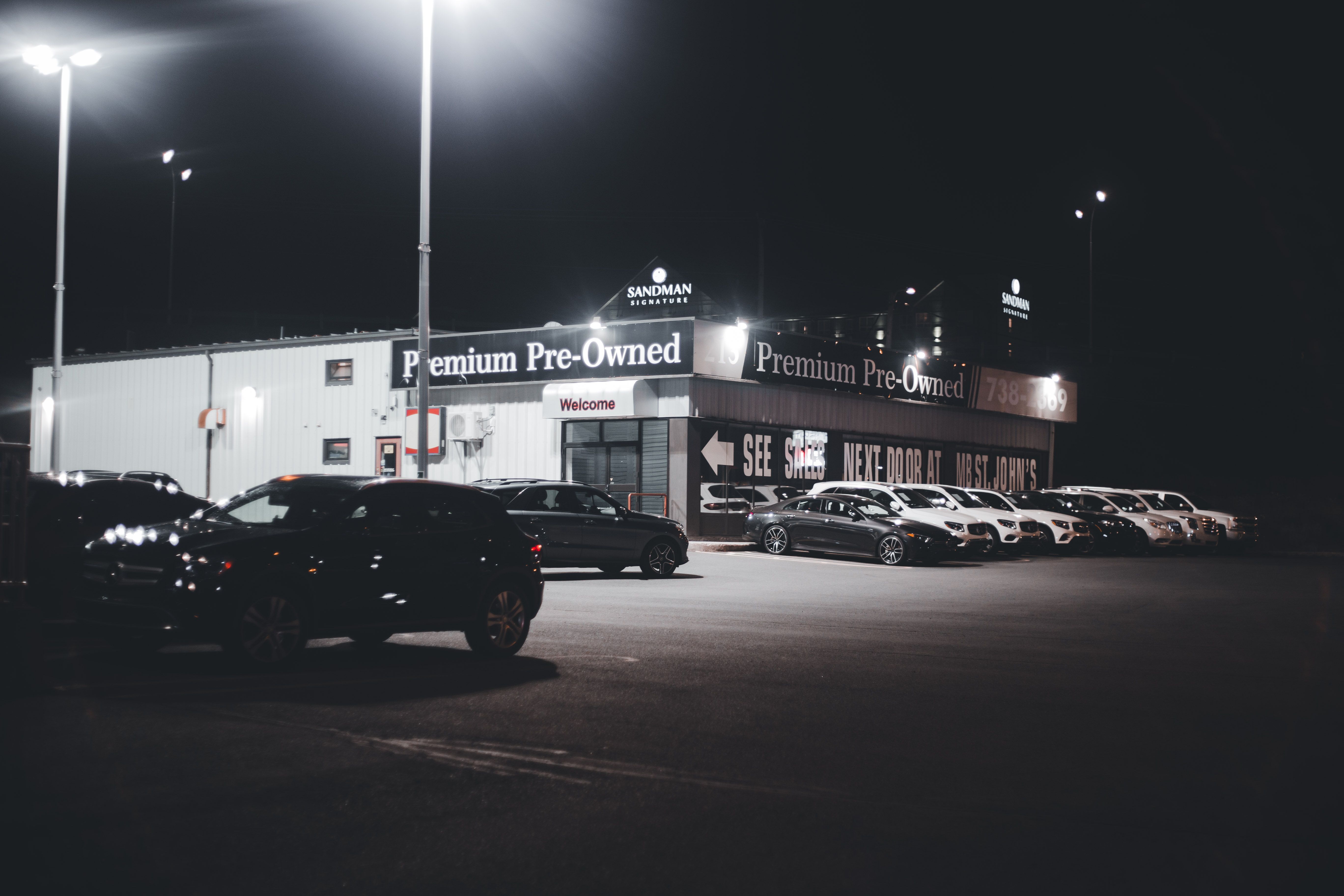
So picture two identical Camrys, same trim, same mileage, sitting on two different dealer sites in the same search results. One listing reads like a template that’s been stylistically polished. The other mentions the actual service records, the specific reason the price is where it is, and something about the town it’s likely to be driven in. Which one would you call about first? I know which one I’d trust, and it isn’t the one that merely sounds less robotic.
What actually makes a listing sound human – humanizer or not
The dealerships getting real mileage out of AI-assisted listings aren’t the ones leaning hardest on a second rewrite pass. They’re the ones feeding the first pass better material. A3 Brands’ recommendation for AI-search-ready vehicle detail pages: a 300-word-plus description with local context (how the model handles regional winters or mountain roads, for instance), a short FAQ pulled from real buyer questions, and a comparison against two competing models – all wrapped in proper Vehicle and FAQ schema markup so the content is machine-readable, not just human-readable. None of that requires disguising anything; it requires having something specific to say in the first place.
Cox Automotive’s retail research group makes a related point from the discovery side: large language models weigh dealership data quality directly, and dealers with VIN-level enrichment and merchandising notes are significantly more likely to surface in conversational search results than dealers running thin, generic listings. Style is a small lever next to substance. A humanizer can make a sentence sound less mechanical in thirty seconds; it can’t manufacture the maintenance record, the second key fob, or the fact that the previous owner replaced the tires eight months ago. Those details do more for both a buyer’s trust and an AI system’s citation decision than any amount of sentence-rhythm variation.
Two questions dealers keep asking before they hit publish
Will Google or a marketplace penalize a humanized listing? Not directly for being humanized – but duplicate or near-duplicate content across your own inventory (or across dealers on the same website platform) is already treated as low-value by AI Overview-style systems, according to the C-4 Analytics data referenced above. A humanizer changes phrasing per unit; it doesn’t fix that root duplication problem if every listing is still built from the same template skeleton underneath.
Should a dealership disclose that a description was AI-assisted? The research argues against volunteering the word “AI” in the copy itself, whether or not a humanizer touched it. A 2024 study led by Washington State University’s Mesut Cicek, tested across eight product and service categories with more than 1,000 U.S. adults, found that simply including the term “artificial intelligence” in a product description lowered purchase intent – an effect the researchers found was stronger for higher-stakes purchases. “When AI is mentioned, it tends to lower emotional trust, which in turn decreases purchase intentions,” Cicek told WSU Insider. A car is about as high-stakes as retail purchases get. The practical takeaway isn’t to hide the workflow; it’s to keep the finished listing focused on the vehicle, not the process that produced it.

Where this is heading
I don’t think humanizer tools disappear from this workflow – they’re cheap, fast, and they do genuinely improve how a mass-produced sentence reads, which matters when a dealer has 300 units to describe by Friday. But treating a humanizer as the fix for generic listings mistakes the symptom for the disease. The dealerships that will actually earn trust, and actually show up when a shopper asks an AI assistant a specific question, are the ones feeding real, unit-specific detail into the first draft: service history, local relevance, an honest note about what the car isn’t. A humanizer can make that sentence read a little more naturally on the way out. It can’t write it for you.
How this article was put together: research drew on dealership AI-vendor product pages (CDK Global, Vehiso, CarDescribe, Spyne, TraderWay, Hrizn) accessed in August 2026, industry survey data from CarGurus/NielsenIQ, Cars.com, Ekho, and Urban Science/Harris Poll fielded between mid-2025 and early 2026, the Washington State University study on AI disclosure and purchase intent (2024), and reporting on AI humanizer mechanics and detector countermeasures current as of August 2026. Vendor-reported statistics (engagement lifts, detector pass rates) are noted as self-reported where no independent verification exists. Detector and humanizer capabilities change quickly; figures here should be rechecked after a few months.